The EMiC Network is excited to announce CyberQ Group as a sponsor for the upcoming Cyber Diversity Awards 2024.
Widely recognised as award-winning cyber experts, CyberQ Group brings a cutting-edge, technology-based approach to strengthening organisational strategies against cyber threats. Their innovative approach aligns seamlessly with the ethos of the Cyber Diversity Awards, positioning them as an ideal sponsor for this event.
The Cyber Diversity Awards, organised by the EMiC Network, aims to celebrate, and recognise outstanding contributions to diversity and inclusion within cyber security. With CyberQ Group on board, this year’s event promises to be even more impactful, bringing together leaders, professionals and advocates dedicated to advancing diversity in cyber security.
For more information on available sponsorship packages and to secure participation in the Cyber Diversity Awards 2024, please contact: p.pillai@wlv.ac.uk
The EMiC network is a network for the Black, Asian and Ethnic Minority cyber academia, professionals, and businesses with the long-term aim of significantly improving representation across the cyber sector. The network was created to help build an understanding of the barriers members face when attempting to access leadership positions in decision making groups and influence regional and national decision-makers. To inform and challenge national policymaking, providing feedback and insight to proposed policy interventions and strategies and to create a space for collaboration, training, mentorship and share learning and best practice.
On Tuesday, 27th June 2023, the Ethnic Minority in Cyber Network (EMiC) hosted the National Symposium on Cyber Strength through Ethnic Diversity, a pivotal event dedicated to addressing diversity issues within the cyber security sector. Held at the Park Regis Hotel in Birmingham, the event brought together industry leaders, experts, and enthusiasts from diverse backgrounds to discuss the importance of inclusivity and innovative strategies to improve diversity in the ever-evolving realm of cyber security.
The symposium kicked off with a series of engaging talks and panel discussions that delved into various aspects of diversity in the cyber security industry. Topics ranged from gender and ethnic diversity to neurodiversity and the role of ally ship in creating an inclusive work environment.
A highlight of the symposium was the “Seeds for Change” workshop, which encouraged delegates to roll up their sleeves and actively participate in open discussions. The workshop aimed to not only highlight the diversity issues but also provide actionable solutions and best practices for attendees to take away and implement within their own organisations.
The National Symposium on Cyber Strength through Ethnic Diversity was a resounding success, marking a significant step forward in the EMiC Network’s bid to raise awareness and create a more inclusive industry for cyber security professionals of all backgrounds.
For further information on upcoming EMiC Network events, please visit www.emic-network.co.uk.
In a bid to strengthen ties among local businesses, the Herefordshire and Worcestershire Chamber of Commerce organised a “Meet the Neighbours” networking event, free of charge, for its members in April 2023. Hosted at the Midlands Centre for Cyber Security, the session provided a valuable opportunity for start-up businesses, established enterprises and professionals from around the region to expand their network and explore new business opportunities.
The Midlands Centre for Cyber Security, a national hub for innovation and expertise, served as an ideal venue for this collaborative gathering and the centre’s impressive, open-plan atrium set the stage for productive discussions and relationship-building.
Networking sessions, like the one hosted by Herefordshire and Worcestershire Chamber of Commerce, play a crucial role in promoting business growth and regional development. They also offer a platform for professionals to exchange knowledge and share similar experiences which may lead to future partnerships and ventures.
For updates on future networking events and opportunities to connect with local businesses, please visit the Herefordshire and Worcestershire Chamber of Commerce’s website at www.hwchamber.co.uk.
On 6th December, the Herefordshire & Worcestershire Chamber of Commerce (HWCC) and the Cyber Quarter (CQ) joint-hosted the launch event of the latest Quarterly Economic Survey (QES) results. The event was attended by local Hereford businesses to listen to the report and to discuss how the findings could effect, or be applied to, their businesses going forward.

Speaking on the results was Director of Business Development and Engagement at the HWCC, Robert Elliott. Following up with him post-event, he shared the importance of the QES’s and the impact that they have to local businesses:
“The Quarterly Economic Survey allows us a Chamber to gauge business performance and outlook every three months. The survey has been gathering information since 1989 and as a result has enabled businesses to plan investment, recognise trends that might require action, and benchmark themselves against other organisations. Measuring sales, cashflow, and recruitment, the survey acts as a barometer of economic activity for Herefordshire and Worcestershire, and where challenges are highlighted such as recent concerns over energy costs and inflation alerts us to lobby local and national government via local partners and British Chamber of Commerce respectively.”
It was an honour for the Cyber Quarter to sponsor this edition of the QES and to be able to support questions in the survey based around ‘business resilience’. Through the data, the Cyber Quarter were able to identify key findings that demonstrate where businesses are in their business resilience journeys and reflect their top priorities in their disaster recovery.

With latest research indicating that a small business in the UK is successfully hacked every 19 seconds, it was reassuring to see that, according to the results from the QES, 63% of local businesses report that one of their top priorities in their business resilience is ensuring that their systems are secure. This is essential to ensure the protection of their supply chain, customer base, but also their people.

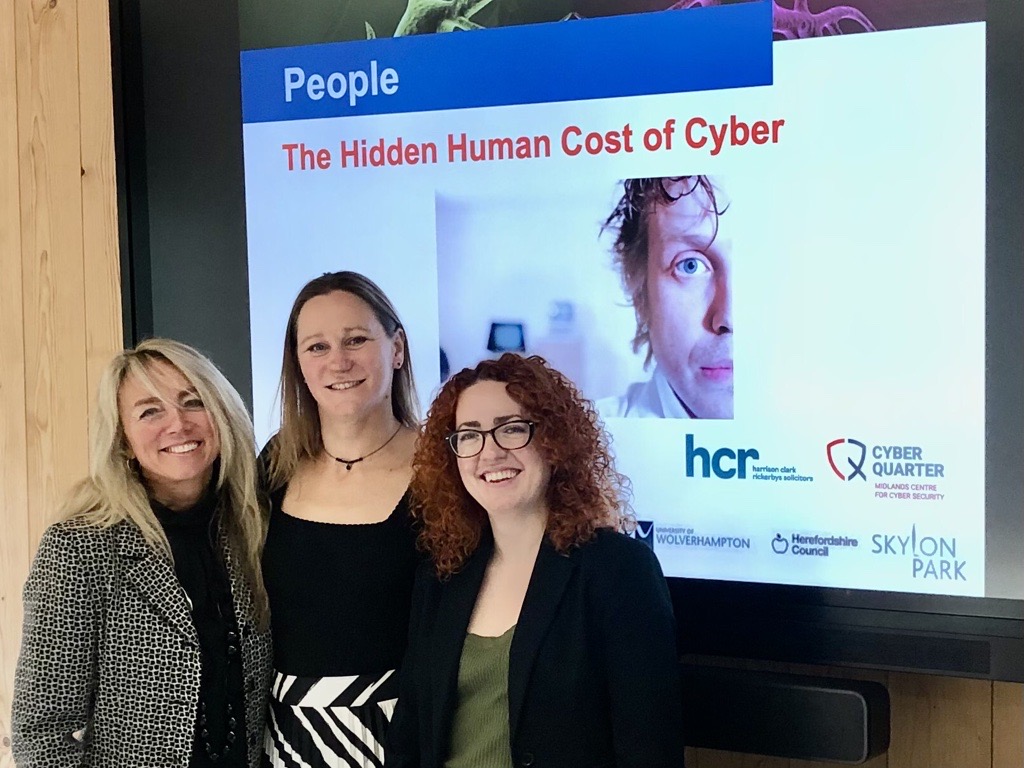
To support this, the Cyber Quarters Human Factors Specialist, Ellen Kay, gave a talk to the businesses that attended around the topic of human resilience and the importance of protecting the people within a business. Joined by Clare Murphy & Rebecca Kirk (Harrison Clark Rickerbys Ltd), the trio delivered insights into the people culture of a business in order to understand the hidden human cost of cyber.
Left to Right: Rebecca Kirk (HCR), Clare Murphy (HCR), Ellen Kay (CQ), Robert Elliott (HWCC)
The Cyber Quarter are able to support local businesses by offering 15 hours of fully funded support (eligibility required) to access specialist and academic expertise from the University of Wolverhampton, which may include: cyber security awareness, how to minimise cyber risk, incident response management and more. Once the initial support has been completed, the Cyber Quarter can then help deep dive into a business’s potential issues and support them further on their next steps to a secure and prospering business.

To begin your Cyber Quarter journey, send an enquiry to us via our website.
Although it can be quite daunting, one of the best ways to realise the importance of sound cyber security is through knowing the facts.
According to Hiscox, one small business in the UK is successfully hacked every 19 seconds. Every day, it is estimated that there are around 65,000 attempts to hack small-to-medium sized businesses (SMBs), with around 4,500 being successful. That’s a massive 1.6 million SMBs in the UK every year.
Furthermore, research demonstrates that one of the leading causes of cybersecurity breaches is due to human error. In 2021, it was found to be responsible for 95% of breaches, which has understandably led to the call for attention to be drawn to Human Factors.
In cybersecurity, human factors refer to the situations when the human error results in a successful data or security breach; it can be said that humans are the weakest component in terms of security and imply the greatest risks and threats for any business or organisation. Unfortunately, a growing factor that is influencing human error is increased levels of stress.
According to CIISec’s 2020/2021 State of Profession report, 557 security professionals have said that stress has become a major issue in recent years, with 80% also saying that they have seen the first-hand effects of stress on their staff. This is concerning as research has shown that, when people are stressed, they are more vulnerable to the attempts of cyber criminals.
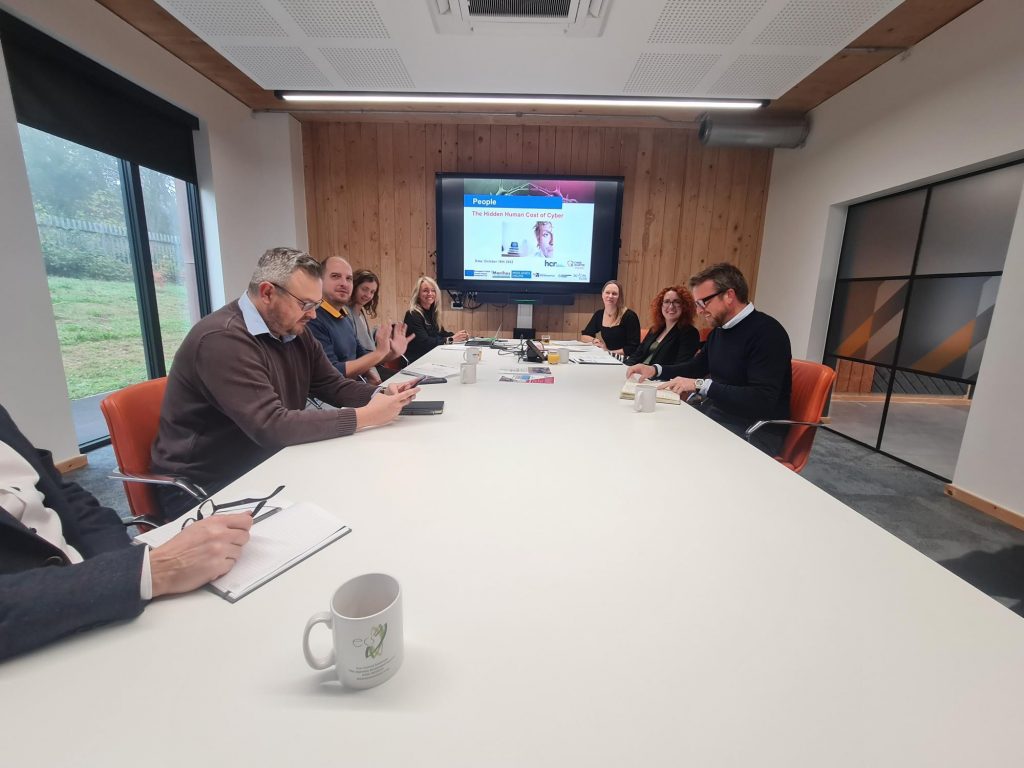
To raise awareness of this, the Cyber Quarter recently held a workshop at the Cyber Quarter building in Hereford entitled ‘People – The Hidden Human Cost of Cyber’ as part of a Business Resilience Programme. The aim of this workshop was to share insights with local businesses on how, by de-risking your people’s behaviours, de-risking your contracts and optimising your insurance, you can actually thrive after a cyber-attack and not just survive.
Along with Clare Murphy & Rebecca Kirk from Harrison Clark Rickerbys Ltd, the Cyber Quarter were joined by Human Factors Specialist Ellen Kay.
“Our people are not only our greatest asset but our greatest liability. You don’t hire your greatest insider threat you create them OR you give them your password! We can de-risk our organisations if we de-risk the thinking and behaviours of our employees. There is also a significant benefit by taking professional advice in advance of an attack and not afterwards. The most significant one is cost savings. Creating a culture of resilency will enhance not only performance but reduce risk. And at a time of huge economic change it is never more important to take care of your costs, your contracts, your supply chain, your customers, your employees and your market position. If you take action you can take control.” Ellen Kay.
Here is some feedback from the session:
“Invaluable advise”, “Thank you, thank you, thank you”, “Informative case studies”, “A great format”
All the businesses who attended the workshop were able to apply the insights from the session into their own business. New employment contracts are being drafted, bespoke workshops are being discussed for a clients’ client-base and another company has signed up for our complete Human Factors programme. If you’re a business looking for support to improve your cyber resilience, feel free to send us an enquiry via the Cyber Quarter website, or send us an email via the address below.
In a bid to promote cyber security awareness and digital safety among families, Cyber Quarter hosted the highly anticipated Family Cyber Discovery Day at the Midlands Centre for Cyber Security on Tuesday 25th October, attracting families from across Herefordshire.
The Family Cyber Discovery Day consisted of interactive activities and engaging workshops, making it a memorable experience for participants. Families gathered to explore the fascinating world of cyber security through online games catered to different age groups, educational talks, and an engaging Cyber Maze challenge designed for families to navigate together.
One of the highlights of the event was the presence of Boston Dynamics’ agile mobile robot dog, Spot. Attendees were treated to engaging demonstrations showcasing Spot’s incredible capabilities, allowing families to witness first hand how robots like Spot can assist in various scenarios and tasks.
The primary goal of the event was to promote digital resilience and empower families to stay safe online. With the increasing prevalence of cyber threats and online dangers, the need for such awareness initiatives has become paramount and the event provided families with valuable skills and knowledge to navigate the digital world securely.
Due to the overwhelmingly positive response and impact on the community, Cyber Quarter are now putting plans in place for the next Family Cyber Discovery Day.
To access additional details about the upcoming 2023 Family Cyber Discovery Day, please complete our enquiry form using the link provided below.
On the 26th May, we invited local businesses in Herefordshire to come and visit the Cyber Quarter – Midlands Centre for Cyber Security for a joint briefing between us and the Regional Cyber Crime Unit (RCCU) to hear a succinct update about the latest trends and threats in cyber at the moment and how SMEs can use this knowledge to further protect their business.
According to the recent Department for Digital, Culture, Media & Sport (DCMS) Cyber Security Breaches Survey 2022, in the last 12 months, 39% of UK businesses identified a cyber-attack. Within the group of organisations reporting cyber-attacks, 31% of businesses and 26% of charities estimate they were attacked at least once a week. Additionally, just over half of businesses (54%) identified in this survey have acted in the past 12 months to identify their own potential cyber security risks.
Considering these alarming statistics, we joined up with the RCCU to deliver a presentation to businesses in the area. Jack Litman represented the RCCU, and we caught up with him afterwards to hear more about his time at the Cyber Quarter – Midlands Centre for Cyber Security.
Jack is currently a student at Birmingham City University and is working towards a bachelor’s degree in digital forensics. In September 2021, he was successful in securing an internship with the RCCU and has spent the last year representing the RCCU at various events to help deliver more of these important briefings to businesses regionally.
Jack Litman, Cyber Crime Intern
“I really enjoyed networking with the local businesses around the Cyber Quarter, especially in such an amazing building and venue. It was a great opportunity to talk to people and raise awareness around what the Cyber Crime unit does and give them awareness of what we do and what support they can get from law enforcement reporting routes. It was really nice to be given a speaking slot so that I could talk all this through in a more formal setting and also give the attendees some helpful cyber tips that they could take away from the event.
In my presentation, I went over a bit about the NCSC Cyber Aware campaign and the main take aways that the attendees can think about that would massively enhance their cyber resilience in both their workspace and home space. I also spoke about reporting routes as well, so not just action fraud and cyber crime, but also how they can report things like phishing emails and texts, for example.
I think that the Cyber Quarter building is a really nice workspace and I think it’s an excellent hub of cyber security knowledge and a great place for SMEs to be.”
We’d like to give a big thank you to Jack and the RCCU team for taking the time to come and speak at the Cyber Quarter and for demonstrating how the unit supports local businesses. Stay tuned for more cyber security & threat updates to come in the future!
Jack and the RCCU team will be joining us again at our upcoming ‘meet the neighbours’ family event taking place on 14th July in collaboration with the Herefordshire & Worcestershire Chamber of Commerce.
To register for this event, please express interest via the link below:
To wrap up the topics surrounding stress awareness month, we wanted to look into stress in a little more detail, – it’s causes to how we can help manage it better. For this, we asked Ellen Kay, our Human Factors Specialist, and Jake Moore, Global Cybersecurity Advisor for ESET for a few words. They both identified several causes for stress and the impact it has on the cyber community.
Ellen Kay – “The main cause of absenteeism in companies is ‘stress’ and anxiety related problems which then cause other health problems. And the biggest triggers are emotional and psychological stress. These then ultimately lead to other conditions and health problems, which cause people to be even more sick.
As a result of that, people become less creative. They’re less innovative. They’re less productive. They produce less outcomes. They communicate less. And they’re less engaged in the workplace. All of this is demonstrated by what they do more so than what they say. They are quiet, more reserved, and can become agitated and angry.
These negative behavioural traits then have a direct effect on profits and growth. These people also tend to be sick more frequently, they tend to be more competitive in a way that does not add real value to the business, they tend to resist change more, they’re more hostile, they’re more resentful, they’re more anxious, and ultimately more depressed. These behaviours are easy to see once we become more aware of our own body language and that of our colleagues.
Stressed employees add to the toxic environment that they’re reacting to, which then causes the environment to become more stressed, which causes people to become more reactionary. And the cycle continues. It’s a big problem all over the world.”
Continuing, Jake said:
Jake Moore – “There are factors that can contribute to stress in cyber security that you might not see in other areas. And one of these is that there is a cyber skills shortage, and with this you get more responsibility per job. With more people that are trained, you can distribute jobs more evenly, though because of the gap people aren’t entering the industry as much as we would’ve hoped. There’s also a lot of immense pressure on the industry because it’s linked to a business going down completely because livelihoods are attached to attacks. With this pressure and increased stress comes burnout because of constant mounting pressure. An issue is blame culture, though I think that we should move away from that and instead learn from every mistake”
Ellen and Jake both have amazing insights into the topic of stress in cyber and it was really thought provoking to have conversations with them both. Interestingly, when I asked them about how we can help combat stress, they both highlighted the importance of human conversation to discuss stress in order to raise awareness to stress and to show our colleagues that they’re not alone in how they feel:
Ellen – “The overarching support we can offer colleagues is 1) self-awareness i.e. be more aware of our own stress levels and what triggers cause us to have stressful reactions and behaviours and 2) behavioural changes in colleagues / changes in their body language indicating they are stressed. When we become more aware of ourselves then we can become more aware of others and help them. But awareness is not easy when we live in a state of survival (stress) most of the time and that stops us being supportive of ourselves and others.”
Jake – “I always think that cyber training isn’t just down to training but is also down to conversations and to discuss it with your colleagues. Discuss the funny things, as it all raises awareness in a very fun way. With phishing being the number one attack on businesses, why not discuss it? It just makes people that little bit more conscious about what they’re clicking on.
Talking about the human element makes people listen, they can relate to it. Put yourself into another person’s shoes and think about how can I not become another victim? That’s really powerful. Once discussions happen, people can be relieved and that stress can be taken away. I love telling people about what a fun industry the cyber security industry is. I think we can prove how fun it can be, and I think one of the best parts is the fast-moving element of it. It changes every day and it comes with its challenges that can be difficult, but that challenge is a fun challenge instead of us seeing it as something that can burn us out completely. To make it easy and open to talk about, emails from someone respected in the company just saying “it’s okay to not be okay” is really powerful. It’s good to reiterate it with a business mind. It’s okay to feel stress, or imposter syndrome. Stress has an amazing reaction that can spiral out of control and the end result can be burnout. There’s that assumption that people at the top have got it all covered, that they’re not stressed, but it’s simply not true. So, it’s good to have these conversations, and to show that everyone can have imposter syndrome to a certain extent. And working from home has made it even more difficult.”
As summarised by both Ellen & Jake, it’s important to recognise that stress affects us all, and by initiating and taking part in more of these conversations, together as a community we can break down barriers and combat stress as a collective to really drive home the message “it’s okay to not be okay”.
As part of the Human Factors programme at the Cyber Quarter in Hereford, we show people the formula to teach people how to make significant changes in their brain and body to help combat stress. To learn more, please complete an enquiry or send a direct email to our Human Factors Specialist, Ellen Kay: e.kay@wlv.ac.uk
Diversity and Inclusivity have been a point of discussion in the cyber sector for over a decade now. There have been several government and private sector led initiatives over the years trying to further improve the diversity in the cyber sector. We all agree that diversity adds strength to any cyber team. However, there are still several barriers and challenges that ethnic minorities in the UK are still facing when either trying to get into the cyber sector or when they are looking at career progression within the sector.
The Ethnic Minority in Cyber (EMiC) network is a pilot network supported by Department of Digital, Culture Media & Sport (DCMS)
The University of Wolverhampton have been leading the pilot network with other partners and took an active role in creating a series of student training workshops for ethnic minority students to support their career development. Over 300 students registered for the four sessions. Cyber Quarter was one of the partners involved in the delivery of these workshops of the network and was also involved in leading the delivery of the EMiC Flagship event – The ‘Symposium on Cyber Strength through Diversity (Ethnicity)’, held at the Edgbaston Park Hotel in Birmingham on 28 April 2022. The event was attended by cyber professionals from industry, government, and academia. It consisted of selected talks and a facilitated workshop that not just looked at key challenges and perceptions of the cyber sector, but also how some possible solutions that could be developed.
The Keynote speech was delivered by Simon Hepburn, CEO of the UK Cyber Security Council, who emphasised the importance of diversity in cyber teams and the steps the Council are taking on further supporting this. Andrew Elliot, Deputy Director Cyber Security, DCMS also presented the different initiatives the government has taken over the years and how they have helped improve the diversity in the cyber sector.
Our very own Professor Prashant Pillai, Centre Director Cyber Quarter and Associate Dean University of Wolverhampton, who is the Steering Group Co-Chair for the EMiC network said, “The was a successful event that was well attended and received excellent feedback. It has not only made us all think about some of the key aspects but has also got several key leaders of the sector to support the network by pledging to become an EMiC mentor. The network will not only help people who want to get into cyber or those who are looking at career growth but will also help businesses to bring diversity into their cyber teams. We are aiming to make this a national network and are planning several activities and events over the next year.”
On 3May 2022, DCMS published the 2022 Cyber Security Skills in the UK Labour Market report, which highlights 25% of the workforce came from ethnic minority background. More information can be also found in the Joint report between the NCSC and KPMG UK called Decrypting Diversity: Diversity and Inclusion in Cyber Security.
Cybersecurity stress has been described as an industrywide epidemic amongst many cyber and security professionals. Talking about stress can be a difficult conversation for many, however, it is important to address workplace stress before its consequences affect both people and the business.
Stress can be one of the biggest underrated insider threats to a business. According to CIISec’s 2020/2021 State of Profession report, 557 security professionals have said that stress has become a major issue due the COVID-19 pandemic, with 80% also saying they have seen first-hand the effects of stress on their staff. These figures are a significant concern as it’s been shown that people are more vulnerable to the attempts of cyber criminals whilst feeling stressed. A Cyberchology (2020) report found that when stress levels are heightened, staff members are more likely to panic and potentially click on a malicious link or fail to report any security breaches to their IT team.
Workplace stress is becoming such an issue that, according to VMware’s 2021 Global Incident Response Threat Report, 65% of cyber professionals have said that they have considered leaving their job because of stress and CIISec’s 2020/2021 report states that 51% of cybersecurity professionals are kept up at night due to the stress of their job.
The facts and figures are clear that stress is a serious topic in the cyber community that needs to be more thoroughly addressed. Therefore, we asked our Human Factors Specialist, Ellen Kay, for her top tips for dealing with workplace stress and how we can spot signs of stress in others:
“I want to talk to you about one of the most common things in the workplace that break down teams and organisations around the world.
I’ve worked with MANY different companies, corporations, upper management and human resources, and they’re always talking about the impact of stress in their businesses. Stress is when your brain and body are knocked out of homeostasis. The stress response is what your body innately does to return itself back to order.
All organisms in nature, every creature, can tolerate short-term stress. But when the stressors add up and people keep reacting to threats and conditions in their external environment over and over again, they’ll keep their brain and body out of balance. And as a result, a system is going to break down. That means, individuals are going to break down. Teams are going to break down. Because no organism can live in emergency mode for an extended period of time.
Living in emergency means living in stress. And living in stress is living in survival. And what are the effects of that?
It turns out that the main cause of absenteeism in companies and organisations, has to do with stress and anxiety related problems that add to health problems. Over 75%of people who walk into a healthcare facility in the western world, walks in because of emotional and psychological stress. This emotional and psychological stress ultimately leads to other conditions and health problems, which cause people to be more sick. As a result, people become less creative, less innovative. They’re less productive and produce fewer outcomes. They communicate less and they’re less engaged in the workplace.
This has a direct effect on profits and growth in a business. They also tend to be more sick, and tend to be more competitive in a way that does not add real value to the business, they are more resistant to change, they’re more hostile, more resentful, more anxious and more depressed. They add to the toxic environment that they’re reacting to, which then causes the environment to become more stressed, which causes people to become more reactionary. And the cycle continues. It’s a huge problem all over the world.
It turns out that there’s a way to teach people how to make significant changes in their brain and body, and it’s actually a formula. The Human Factors offering at Cyber Quarter teaches this formula, and I want to share some of that information with you. Are you looking after your organisation, are you looking after your people, are you looking after you?”
To learn more about the impacts of stress and your business, sign up for our three upcoming Human Factors Briefings. Follow the links below to register your interest:
We use cookies on our website to give you the most relevant experience by remembering your preferences and repeat visits. By clicking “Accept All”, you consent to the use of ALL the cookies. However, you may visit "Cookie Settings" to provide a controlled consent.
This website uses cookies to improve your experience while you navigate through the website. Out of these, the cookies that are categorized as necessary are stored on your browser as they are essential for the working of basic functionalities of the website. We also use third-party cookies that help us analyze and understand how you use this website. These cookies will be stored in your browser only with your consent. You also have the option to opt-out of these cookies. But opting out of some of these cookies may affect your browsing experience.
Necessary cookies are absolutely essential for the website to function properly. These cookies ensure basic functionalities and security features of the website, anonymously.
Cookie
Duration
Description
cookielawinfo-checkbox-analytics
11 months
This cookie is set by GDPR Cookie Consent plugin. The cookie is used to store the user consent for the cookies in the category "Analytics".
cookielawinfo-checkbox-functional
11 months
The cookie is set by GDPR cookie consent to record the user consent for the cookies in the category "Functional".
cookielawinfo-checkbox-necessary
11 months
This cookie is set by GDPR Cookie Consent plugin. The cookies is used to store the user consent for the cookies in the category "Necessary".
cookielawinfo-checkbox-others
11 months
This cookie is set by GDPR Cookie Consent plugin. The cookie is used to store the user consent for the cookies in the category "Other.
cookielawinfo-checkbox-performance
11 months
This cookie is set by GDPR Cookie Consent plugin. The cookie is used to store the user consent for the cookies in the category "Performance".
viewed_cookie_policy
11 months
The cookie is set by the GDPR Cookie Consent plugin and is used to store whether or not user has consented to the use of cookies. It does not store any personal data.
Functional cookies help to perform certain functionalities like sharing the content of the website on social media platforms, collect feedbacks, and other third-party features.
Performance cookies are used to understand and analyze the key performance indexes of the website which helps in delivering a better user experience for the visitors.
Analytical cookies are used to understand how visitors interact with the website. These cookies help provide information on metrics the number of visitors, bounce rate, traffic source, etc.
Advertisement cookies are used to provide visitors with relevant ads and marketing campaigns. These cookies track visitors across websites and collect information to provide customized ads.




 Hursey Road, Rotherwas, Hereford, HR2 6FP
  01432 344424