CyberQ Group Joins Forces with EMiC Network as Sponsor for The Cyber Diversity Awards 2024

The EMiC Network is excited to announce CyberQ Group as a sponsor for the upcoming Cyber Diversity Awards 2024.

Widely recognised as award-winning cyber experts, CyberQ Group brings a cutting-edge, technology-based approach to strengthening organisational strategies against cyber threats. Their innovative approach aligns seamlessly with the ethos of the Cyber Diversity Awards, positioning them as an ideal sponsor for this event.

The Cyber Diversity Awards, organised by the EMiC Network, aims to celebrate, and recognise outstanding contributions to diversity and inclusion within cyber security. With CyberQ Group on board, this year’s event promises to be even more impactful, bringing together leaders, professionals and advocates dedicated to advancing diversity in cyber security.

For more information on available sponsorship packages and to secure participation in the Cyber Diversity Awards 2024, please contact: p.pillai@wlv.ac.uk

Cyber Quarter – Strengthening business resilience, one person at a time!

Although it can be quite daunting, one of the best ways to realise the importance of sound cyber security is through knowing the facts. 

According to Hiscox, one small business in the UK is successfully hacked every 19 seconds. Every day, it is estimated that there are around 65,000 attempts to hack small-to-medium sized businesses (SMBs), with around 4,500 being successful. That’s a massive 1.6 million SMBs in the UK every year. 

Furthermore, research demonstrates that one of the leading causes of cybersecurity breaches is due to human error. In 2021, it was found to be responsible for 95% of breaches, which has understandably led to the call for attention to be drawn to Human Factors. 

In cybersecurity, human factors refer to the situations when the human error results in a successful data or security breach; it can be said that humans are the weakest component in terms of security and imply the greatest risks and threats for any business or organisation. Unfortunately, a growing factor that is influencing human error is increased levels of stress. 

According to CIISec’s 2020/2021 State of Profession report, 557 security professionals have said that stress has become a major issue in recent years, with 80% also saying that they have seen the first-hand effects of stress on their staff. This is concerning as research has shown that, when people are stressed, they are more vulnerable to the attempts of cyber criminals. 

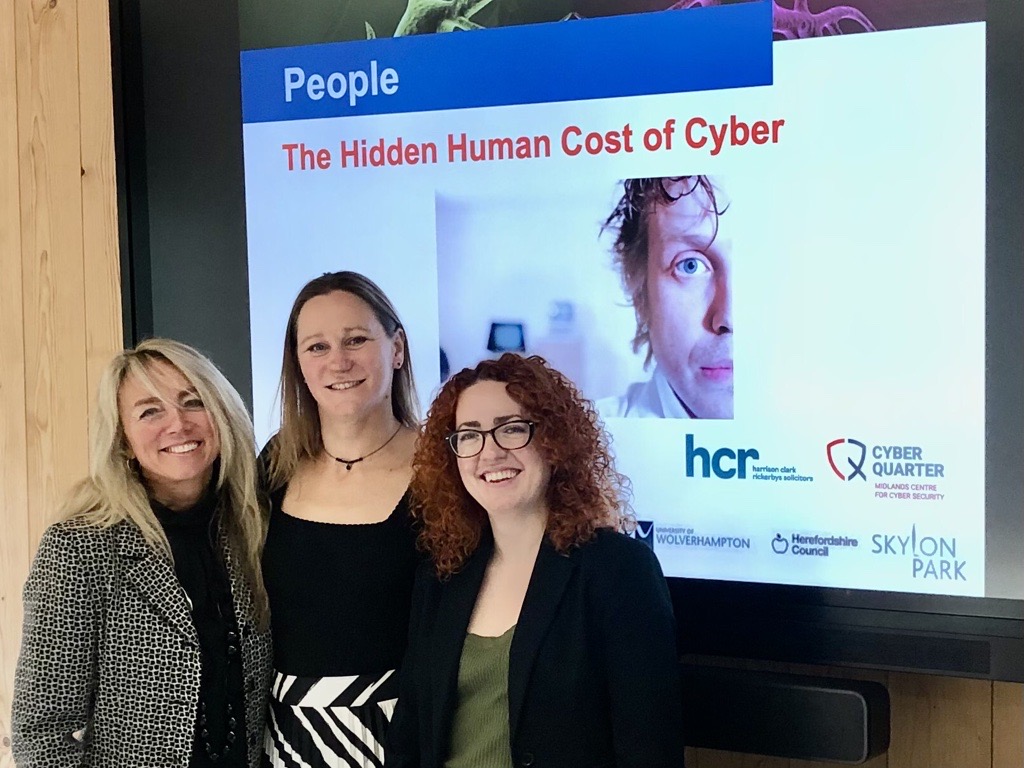
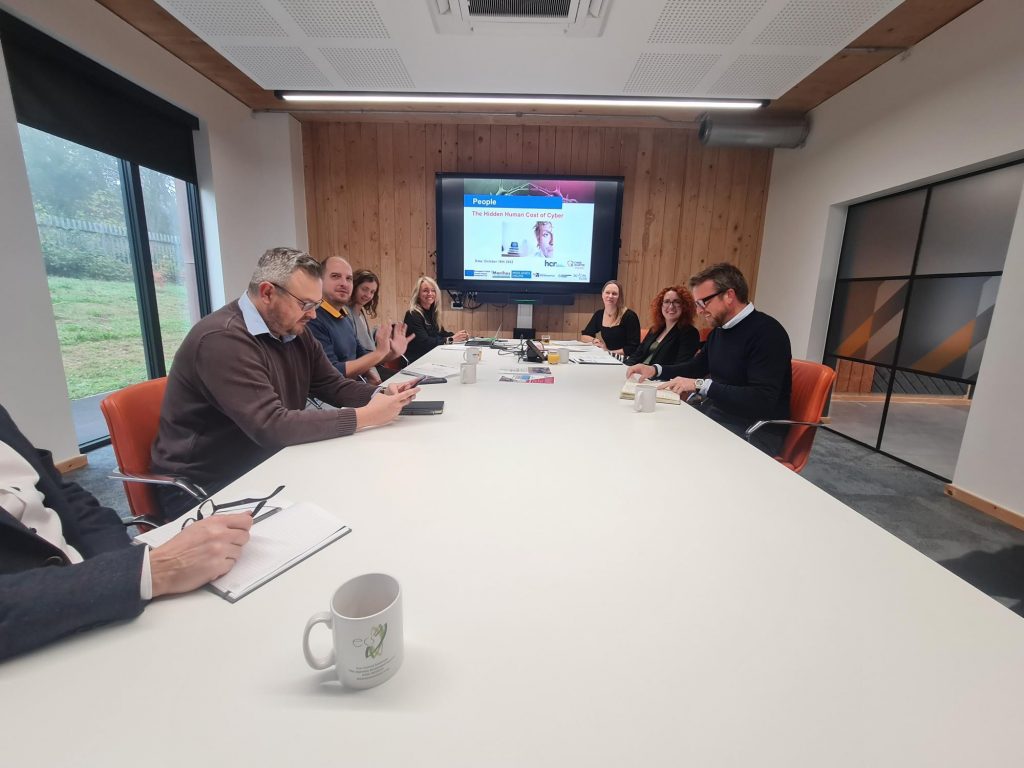
To raise awareness of this, the Cyber Quarter recently held a workshop at the Cyber Quarter building in Hereford entitled ‘People – The Hidden Human Cost of Cyber’ as part of a Business Resilience Programme. The aim of this workshop was to share insights with local businesses on how, by de-risking your people’s behaviours, de-risking your contracts and optimising your insurance, you can actually thrive after a cyber-attack and not just survive.  

Along with Clare Murphy & Rebecca Kirk from Harrison Clark Rickerbys Ltd, the Cyber Quarter were joined by Human Factors Specialist Ellen Kay.   

“Our people are not only our greatest asset but our greatest liability. You don’t hire your greatest insider threat you create them OR you give them your password! We can de-risk our organisations if we de-risk the thinking and behaviours of our employees. There is also a significant benefit by taking professional advice in advance of an attack and not afterwards. The most significant one is cost savings. Creating a culture of resilency will enhance not only performance but reduce risk. And at a time of huge economic change it is never more important to take care of your costs, your contracts, your supply chain, your customers, your employees and your market position. If you take action you can take control.” Ellen Kay. 

Here is some feedback from the session: 

“Invaluable advise”, “Thank you, thank you, thank you”, “Informative case studies”, “A great format” 

All the businesses who attended the workshop were able to apply the insights from the session into their own business. New employment contracts are being drafted, bespoke workshops are being discussed for a clients’ client-base and another company has signed up for our complete Human Factors programme. If you’re a business looking for support to improve your cyber resilience, feel free to send us an enquiry via the Cyber Quarter website, or send us an email via the address below. 

Email: cyberqtr@wlv.ac.uk 

Follow our LinkedIn here

Family Cyber Discovery Day at Cyber Quarter Draws Enthusiastic Crowd for a Day of Cyber Security Fun and Learning

In a bid to promote cyber security awareness and digital safety among families, Cyber Quarter hosted the highly anticipated Family Cyber Discovery Day at the Midlands Centre for Cyber Security on Tuesday 25th October, attracting families from across Herefordshire.

The Family Cyber Discovery Day consisted of interactive activities and engaging workshops, making it a memorable experience for participants. Families gathered to explore the fascinating world of cyber security through online games catered to different age groups, educational talks, and an engaging Cyber Maze challenge designed for families to navigate together.

One of the highlights of the event was the presence of Boston Dynamics’ agile mobile robot dog, Spot. Attendees were treated to engaging demonstrations showcasing Spot’s incredible capabilities, allowing families to witness first hand how robots like Spot can assist in various scenarios and tasks.

The primary goal of the event was to promote digital resilience and empower families to stay safe online. With the increasing prevalence of cyber threats and online dangers, the need for such awareness initiatives has become paramount and the event provided families with valuable skills and knowledge to navigate the digital world securely.

Due to the overwhelmingly positive response and impact on the community, Cyber Quarter are now putting plans in place for the next Family Cyber Discovery Day.

To access additional details about the upcoming 2023 Family Cyber Discovery Day, please complete our enquiry form using the link provided below.

Enquiry Form – Cyber Quarter

“It’s okay to not be okay” – Supporting each other as a community through stress

To wrap up the topics surrounding stress awareness month, we wanted to look into stress in a little more detail, – it’s causes to how we can help manage it better. For this, we asked Ellen Kay, our Human Factors Specialist, and Jake Moore, Global Cybersecurity Advisor for ESET for a few words. They both identified several causes for stress and the impact it has on the cyber community.

Ellen Kay – The main cause of absenteeism in companies is ‘stress’ and anxiety related problems which then cause other health problems. And the biggest triggers are emotional and psychological stress. These then ultimately lead to other conditions and health problems, which cause people to be even more sick.

As a result of that, people become less creative. They’re less innovative. They’re less productive. They produce less outcomes. They communicate less. And they’re less engaged in the workplace. All of this is demonstrated by what they do more so than what they say. They are quiet, more reserved, and can become agitated and angry.

These negative behavioural traits then have a direct effect on profits and growth. These people also tend to be sick more frequently, they tend to be more competitive in a way that does not add real value to the business, they tend to resist change more, they’re more hostile, they’re more resentful, they’re more anxious, and ultimately more depressed. These behaviours are easy to see once we become more aware of our own body language and that of our colleagues.

Stressed employees add to the toxic environment that they’re reacting to, which then causes the environment to become more stressed, which causes people to become more reactionary. And the cycle continues. It’s a big problem all over the world.

Continuing, Jake said:

Jake Moore – There are factors that can contribute to stress in cyber security that you might not see in other areas. And one of these is that there is a cyber skills shortage, and with this you get more responsibility per job. With more people that are trained, you can distribute jobs more evenly, though because of the gap people aren’t entering the industry as much as we would’ve hoped. There’s also a lot of immense pressure on the industry because it’s linked to a business going down completely because livelihoods are attached to attacks. With this pressure and increased stress comes burnout because of constant mounting pressure. An issue is blame culture, though I think that we should move away from that and instead learn from every mistake

Ellen and Jake both have amazing insights into the topic of stress in cyber and it was really thought provoking to have conversations with them both. Interestingly, when I asked them about how we can help combat stress, they both highlighted the importance of human conversation to discuss stress in order to raise awareness to stress and to show our colleagues that they’re not alone in how they feel:

Ellen – The overarching support we can offer colleagues is 1) self-awareness i.e. be more aware of our own stress levels and what triggers cause us to have stressful reactions and behaviours and 2) behavioural changes in colleagues / changes in their body language indicating they are stressed. When we become more aware of ourselves then we can become more aware of others and help them. But awareness is not easy when we live in a state of survival (stress) most of the time and that stops us being supportive of ourselves and others.”

Jake – “I always think that cyber training isn’t just down to training but is also down to conversations and to discuss it with your colleagues. Discuss the funny things, as it all raises awareness in a very fun way. With phishing being the number one attack on businesses, why not discuss it? It just makes people that little bit more conscious about what they’re clicking on.

Talking about the human element makes people listen, they can relate to it. Put yourself into another person’s shoes and think about how can I not become another victim? That’s really powerful. Once discussions happen, people can be relieved and that stress can be taken away. I love telling people about what a fun industry the cyber security industry is. I think we can prove how fun it can be, and I think one of the best parts is the fast-moving element of it. It changes every day and it comes with its challenges that can be difficult, but that challenge is a fun challenge instead of us seeing it as something that can burn us out completely. To make it easy and open to talk about, emails from someone respected in the company just saying “it’s okay to not be okay” is really powerful. It’s good to reiterate it with a business mind. It’s okay to feel stress, or imposter syndrome. Stress has an amazing reaction that can spiral out of control and the end result can be burnout. There’s that assumption that people at the top have got it all covered, that they’re not stressed, but it’s simply not true. So, it’s good to have these conversations, and to show that everyone can have imposter syndrome to a certain extent. And working from home has made it even more difficult.”

As summarised by both Ellen & Jake, it’s important to recognise that stress affects us all, and by initiating and taking part in more of these conversations, together as a community we can break down barriers and combat stress as a collective to really drive home the message “it’s okay to not be okay”.

As part of the Human Factors programme at the Cyber Quarter in Hereford, we show people the formula to teach people how to make significant changes in their brain and body to help combat stress. To learn more, please complete an enquiry or send a direct email to our Human Factors Specialist, Ellen Kay: e.kay@wlv.ac.uk

Stress Awareness Month – The impact of stress & tips for dealing with it

Cybersecurity stress has been described as an industrywide epidemic amongst many cyber and security professionals. Talking about stress can be a difficult conversation for many, however, it is important to address workplace stress before its consequences affect both people and the business.

Stress can be one of the biggest underrated insider threats to a business. According to CIISec’s 2020/2021 State of Profession report, 557 security professionals have said that stress has become a major issue due the COVID-19 pandemic, with 80% also saying they have seen first-hand the effects of stress on their staff. These figures are a significant concern as it’s been shown that people are more vulnerable to the attempts of cyber criminals whilst feeling stressed. A Cyberchology (2020) report found that when stress levels are heightened, staff members are more likely to panic and potentially click on a malicious link or fail to report any security breaches to their IT team.

Workplace stress is becoming such an issue that, according to VMware’s 2021 Global Incident Response Threat Report, 65% of cyber professionals have said that they have considered leaving their job because of stress and CIISec’s 2020/2021 report states that 51% of cybersecurity professionals are kept up at night due to the stress of their job.

The facts and figures are clear that stress is a serious topic in the cyber community that needs to be more thoroughly addressed. Therefore, we asked our Human Factors Specialist, Ellen Kay, for her top tips for dealing with workplace stress and how we can spot signs of stress in others:

“I want to talk to you about one of the most common things in the workplace that break down teams and organisations around the world.

I’ve worked with MANY different companies, corporations, upper management and human resources, and they’re always talking about the impact of stress in their businesses. Stress is when your brain and body are knocked out of homeostasis. The stress response is what your body innately does to return itself back to order.

All organisms in nature, every creature, can tolerate short-term stress. But when the stressors add up and people keep reacting to threats and conditions in their external environment over and over again, they’ll keep their brain and body out of balance. And as a result, a system is going to break down. That means, individuals are going to break down. Teams are going to break down. Because no organism can live in emergency mode for an extended period of time.

Living in emergency means living in stress. And living in stress is living in survival. And what are the effects of that?

It turns out that the main cause of absenteeism in companies and organisations, has to do with stress and anxiety related problems that add to health problems. Over 75%of people who walk into a healthcare facility in the western world, walks in because of emotional and psychological stress. This emotional and psychological stress ultimately leads to other conditions and health problems, which cause people to be more sick. As a result, people become less creative, less innovative. They’re less productive and produce fewer outcomes. They communicate less and they’re less engaged in the workplace.

This has a direct effect on profits and growth in a business. They also tend to be more sick, and tend to be more competitive in a way that does not add real value to the business, they are more resistant to change, they’re more hostile, more resentful, more anxious and more depressed. They add to the toxic environment that they’re reacting to, which then causes the environment to become more stressed, which causes people to become more reactionary. And the cycle continues. It’s a huge problem all over the world.

It turns out that there’s a way to teach people how to make significant changes in their brain and body, and it’s actually a formula. The Human Factors offering at Cyber Quarter teaches this formula, and I want to share some of that information with you. Are you looking after your organisation, are you looking after your people, are you looking after you?”

To learn more about the impacts of stress and your business, sign up for our three upcoming Human Factors Briefings. Follow the links below to register your interest:

25th April – https://lnkd.in/dxvZ5ZCR
26th April – https://lnkd.in/dmJUm5Nn
27th April – https://lnkd.in/dvcaicPd

Innovation Alliance for the West Midlands – Cyber Working Group

On the 3rd  March, the Innovation Alliance for the West Midlands hosted the first official meeting for the Cyber Working Group – chaired by the Director of the Cyber Quarter, Professor Prashant Pillai, and co-chaired by the Project Manager of the Cyber Quarter, Hugo Russell.

The hour and a half meeting saw over 40 attendees interested in building the Cyber Ecosystem share ideas and collaborate on the future of the working group and its goals, including talks from DCMS (Daljinder Mattu) & Midlands Cyber and agenda items such as a ‘review of the National Cyber Strategy Pillar 1 objectives’ and ‘resource mapping’ to review the regions strengths and capabilities.

The Cyber Working Group is focused on collaborating and finding new approaches to accelerate the adoption and commercialization of cyber security procedures, policies, platforms, and solutions. The organisation is sharing insights and best practises on relevant and developing cyber technologies that are utilised to give value to consumers through this collaborative development and promotion. The group’s strength stems in part from its knowledge of a variety of industries, including automotive, aerospace, defence, finance, and rail, as well as its wide customer and supply chains.

The group will also collaborate to shape the strategies, regulations, and operational elements required to maximise the region’s strong technology and business services networks, with the goal of developing the West Midlands Cyber Ecosystem.

Cyber security is vital to the West Midlands’ operational well-being, with the region having a strong history of technological innovation and adoption. Here, the Cyber Working Group come together for the chance to make the West Midlands more resilient, while strengthening its cyber innovation capability by bringing together cyber related organisations and influencers, including; SMEs, academics, the public sector, and support organisations.

The group is open to anyone that is interested in cyber and the cyber community, so for your chance to be a part of the West Midlands Cyber Ecosystem, save the dates in your diary of the upcoming Cyber Working Group meetings and follow the Innovation Alliance for registration details:

https://www.eventbrite.co.uk/e/cyber-working-group-cwg-tickets-264286326517?aff=iawm

Upcoming dates:

  • 12th May, 10-11:30am
  • 7th July, 10-11:30am
  • 8th September, 10-11:30am
  • 10th November, 10-11:30am             

Source: Innovation Alliance

New cyber building officially opened in Herefordshire

The new £9 million Cyber Quarter – Midlands Centre for Cyber Security based at Skylon Park on the Herefordshire Enterprise Zone has been officially opened today (Monday 6 December 2021).

Erika Lewis, Director for Cyber Security and Digital Identity at the Department for Digital, Culture, Media and Sport, was joined by a senior representative from the National Cyber Security Centre – a part of GCHQ – alongside partners to cut the ribbon on the new building which has already scooped two prestigious construction awards.

The centre is a joint venture between the University of Wolverhampton and Herefordshire Council and is part-funded by the Government’s Local Growth Fund, via the Marches Local Enterprise Partnership (LEP) and the European Regional Development Fund (ERDF).

The £9m state-of-the-art hub supports innovation and industry in the sector, offering a package of tailored security testing, training, Research & Development and sector expertise to businesses and investors.

Minister for Media, Data and Digital Infrastructure, Julia Lopez, said:”This new state-of-art-centre will be a fantastic addition to the country’s booming cyber security industry and offer businesses the support they need to take their ideas to the next level.

 “Growing and developing the UK’s technology sector is a crucial part of our mission to level up and we are backing firms with pro-innovation policies and supporting people to get the skills to succeed.”

Professor Prashant Pillai, Associate Dean Research and Knowledge Exchange and Centre Director Cyber Quarter – Midlands Centre for Cyber Security, said: “Now, more than ever as globally we collectively try to recover following the Covid-19 pandemic, this new centre will be of real value to people who are launching or growing their business.

“The expertise and specialist focus of the new centre will be part of a wider, growing campus of cyber sector companies based within the Cyber Quarter on Skylon Park. The area is already home to a highly regarded cyber economy, and the knowledge, expertise and opportunities that the centre brings will help to establish Herefordshire as one of the capitals of the cyber security sector.

“We are hoping to forge strategic partnerships and relationships with some of the world’s leading expertise in cyber and security, really putting Herefordshire and the Midlands on the international map.”

Cllr David Hitchiner, Leader of Herefordshire Council, said: “It is wonderful to see the Cyber Quarter – Midlands Centre for Cyber Security officially open. We have been working jointly with the University of Wolverhampton for several years now and it has been thrilling to see the Centre take shape.

“Herefordshire is already home to a thriving cyber security industry, and the Cyber Quarter will further cement our status as a capital of the rapidly expanding and cutting-edge sector. The investment is central to our ambition to attract new hi-tech investment, draw expertise and create knowledge-based, high-income jobs in the county.”

Mandy Thorn MBE, Chair of the Marches Local Enterprise Partnership, said: “A huge part of the LEP’s decade of success is the fostering of new partnerships between the public, private and academic sectors. The Midlands Centre for Cyber Security is a landmark example of what we can achieve by working together.

“Developed with LEP investment of £3m from our Growth Deal with Government, it is one of a number of Herefordshire projects that the LEP has supported as part of its £18.8m overall investment into the Zone that will deliver innovation, progress and high-value jobs.”

Andrew Manning Cox, Chairman of the Hereford Enterprise Zone, added: “The opening of this building cements Skylon Park, and the wider Herefordshire area, as the natural home for cyber security research and innovation in this country.

“We are already home to a cluster of businesses working within the sector and the centre will be vital to building on this expertise as we develop our cyber campus, helping companies based here to tap into a £64.5 billion global market.”

Supported by the university’s Wolverhampton Cyber Research Institute (WCRI), the centre offers space for up to 16 cyber SMEs as well as offering product testing and certification, CPD and short courses and cyber conferences attracting experts from across the globe.

The project, a partnership that included Speller Metcalfe, Hybrid Structures, Associated Architects, Cundall, Ramboll, Gleeds and Couch Perry Wilkes as well as the University’s Estates and Facilities Team, recently scooped a Building Project of the Year Award as well as being announced joint winners for the Integration & Collaborative Working Award at the Constructing Excellence West Midlands Awards held in November.

Anyone interested in professional development courses or businesses looking for incubation space can find out more about the Cyber Quarter – Midlands Centre for Cyber Security on the website.

For more information contact the Corporate Communications Team comms@wlv.ac.uk.

Three Counties Defence and Security Expo 3CDSE

Thursday 4th November 2021

The UK’s most diverse and forward-thinking defence and security expo.

3CDSE is an active touchpoint for leading-edge technology and strategic thinking, bringing together the UK’s leading innovators to create a forum for mutually beneficial commercial discussions between industry, armed forces, government, law enforcement and emergency services.

3CDSE is a unique showcase of innovative defence and security SME’s. Whilst the focus is on creating a showcase for SMEs directly to MOD Capability and Procurement teams, we are delighted to welcome larger organisations who may act as an interface between SMEs and the purchaser. The event was initiated by the Three Counties Defence & Security Group (3CDSG), a member trade association with its roots in the Three Counties of Herefordshire, Worcestershire and Gloucestershire.

3CDSG hosts 3CDSE on its ‘home turf’, aiming to foster networking and the sharing of new ideas with those involved in the industry both nationally and internationally.

The show brings together senior military leading forces development and procurement, senior police engaged in the fight against cyber-crime, the intelligence and security agencies, and the industry innovators who supply them, to identify future strategies and needs.

Cited from 3CDSE website:

Welcome – 3CDSE 2021 – The UK’s most diverse and forward-thinking security expo

New cyber centre secures two coveted construction awards

The new Cyber Quarter – Midlands Centre for Cyber Security building based in Herefordshire has secured two coveted top prizes at the Constructing Excellence West Midlands Awards 2021.  

CE Midlands is the organisation charged with driving the change agenda within the East and West Midlands Construction industry through collaborative working. 

The centre is a joint venture between the University of Wolverhampton and Herefordshire Council and part-funded by the Government’s Local Growth Fund, via the Marches Local Enterprise Partnership (LEP) and the European Regional Development Fund (ERDF). 

The project, a partnership that included Speller Metcalfe, Hybrid Structures, Associated Architects, Cundall, Ramboll, Gleeds and Couch Perry Wilkes as well as the University’s Estates and Facilities Team, scooped the Building Project of the Year Award as well as being announced joint winners for the Integration & Collaborative Working Award at the ceremony held in Edgbaston recently. 

Adrian Speller, Technical Director of constructor Speller Metcalfe who was appointed contractor on the project, said: “Having personally grown up in Herefordshire, it’s been fantastic to work with the project partners to construct a building that has generated significant social return on investment through its delivery. 

“Project partners experienced a number of challenges getting the project to site in the first place and it took a lot of value engineering to do that. But every time we hit a challenge, the team just pulled together remarkably. 

“We’re absolutely thrilled to have been recognised for our efforts. The building is now an extraordinary landmark at Skylon Park and undoubtedly will be integral and instrumental in shaping the landscape of cyber security at a local, national and international level.”  

Warren Jukes, Managing Director of Associated Architects, said: “The Cyber Quarter project is the result of a huge effort and support from multiple partners. This award is a testament to all those involved, and we look forward to watching as the building provides significant resources for the University’s research and development in Cyber Security.”

Cyber Quarter – Midlands Centre for Cyber Security offers a package of tailored security testing, training, Research & Development and sector expertise to businesses and investors. 

Supported by the university’s Wolverhampton Cyber Research Institute (WCRI), the centre will offer product testing and certification, CPD and short courses and cyber conferences such as the recent Cyber Fringe Festival attracting experts from across the globe.  

The 2,000 square metre building will provide significant resources for research and development across three cyber laboratories, advanced training facilities as part of the University’s Wolverhampton Cyber Research Institute and additional business space for up to 16 cyber companies. 

The centre, which secured £2.82m of funding via the Marches LEP’s Growth Deal with Government in 2017, is part of the new Cyber Quarter at Skylon Park, already home to numerous defence and security sector businesses. 

The new centre incorporates a full height glass atrium to provide a dual break-out space and function hall, alongside the main three storey building that houses business suites, innovation rooms, IT workshops and a ‘Cyber Range’ – a cutting edge facility that will defend against the global rise of hacking. 

Anyone interested in courses offered or businesses looking for incubation space can find out more about the Cyber Quarter – Midlands Centre for Cyber Security on the website. 

Anyone looking to study at the University of Wolverhampton should register for one of our forthcoming Open Days. 

ENDS 

Cyber is jewel in UK tech crown – report welcomed

Business leaders at Skylon Park today welcomed a new report which  revealed the UK’s growing cyber industry attracted record investment last year despite the global pandemic.

The DCMS Annual Cyber Sector Report, which tracks the UK’s cyber security industry, found the number of active firms in the sector increased by 21 per cent in the last year.

Andrew manning cox

Andrew Manning Cox is Chairman of the Hereford Enterprise Zone, Skylon Park, which is home to the new £9m Cyber Quarter – Midlands Centre for Cyber Security.

He said: “The report shows how vital the fast-growing cyber sector is to the national economic recovery, worth an estimated £8.9 billion, with a record £800 million of investment raised by firms.

“This region has already been identified as the fastest growing hotspot for cyber outside London, so it holds enormous potential for Herefordshire’s future prosperity too.

“Skylon Park is the only enterprise zone in the UK which has a defence and security sector focus.

“We are seeing high numbers of enquiries from potential investors currently – both looking to invest on Cyber Quarter as well as take advantage of some of the specialist services on offer to help protect businesses from cyber threats at the new centre too.”

The new report showed a nine per cent rise in employment in the industry with more than 3,800 new full time jobs created, bringing the total number of people working in the sector to 46,683.

The sector is now worth an estimated £8.9 billion, with a record £800 million of investment raised by firms.

Digital Minister Matt Warman, at the launch of the report, said: “The need for cutting-edge cyber security has never been greater and this resilient sector is growing, diversifying and solidifying its status as a jewel in the UK’s tech crown.

“With more than 3,800 new jobs created, firms – large and small – are doing vital work keeping people and businesses secure online so we can build back safer from the pandemic.”

The main findings from the report are:

  • Despite the current economic climate, 2020 was a new record year for cyber security investment with UK cyber security businesses raising over £821 million across 73 deals – more than twice that raised in 2019
  • The sector’s total annual revenue has continued to rise (by 7 per cent), reaching £8.9 billion within the most recent financial year
  • The sector contributed more than £4 billion to the economy – up 6 per cent in the last year, with mainly mature firms driving growth
  • The majority (65 per cent) of the 46,683 cyber workforce are employed by large firms (250+ employees).