Innovation Alliance for the West Midlands – Cyber Working Group

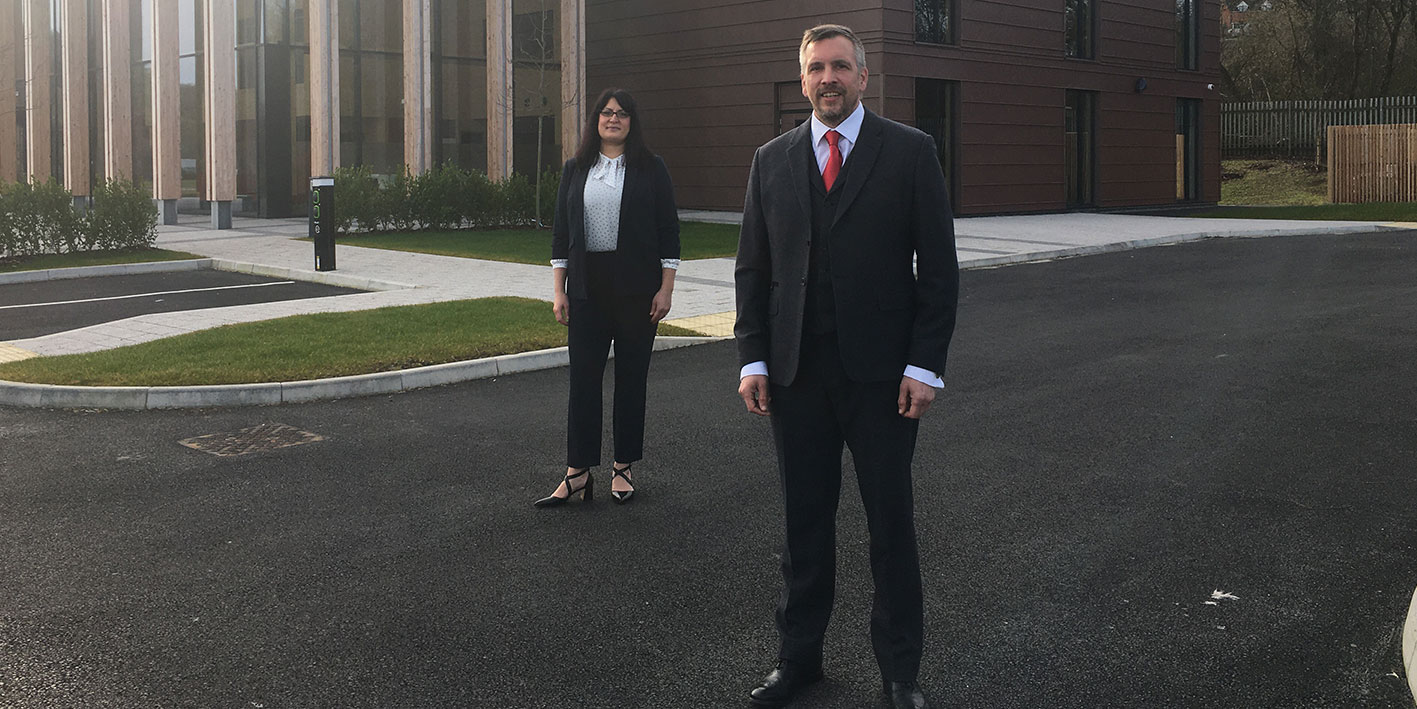
On the 3rd  March, the Innovation Alliance for the West Midlands hosted the first official meeting for the Cyber Working Group – chaired by the Director of the Cyber Quarter, Professor Prashant Pillai, and co-chaired by the Project Manager of the Cyber Quarter, Hugo Russell.

The hour and a half meeting saw over 40 attendees interested in building the Cyber Ecosystem share ideas and collaborate on the future of the working group and its goals, including talks from DCMS (Daljinder Mattu) & Midlands Cyber and agenda items such as a ‘review of the National Cyber Strategy Pillar 1 objectives’ and ‘resource mapping’ to review the regions strengths and capabilities.

The Cyber Working Group is focused on collaborating and finding new approaches to accelerate the adoption and commercialization of cyber security procedures, policies, platforms, and solutions. The organisation is sharing insights and best practises on relevant and developing cyber technologies that are utilised to give value to consumers through this collaborative development and promotion. The group’s strength stems in part from its knowledge of a variety of industries, including automotive, aerospace, defence, finance, and rail, as well as its wide customer and supply chains.

The group will also collaborate to shape the strategies, regulations, and operational elements required to maximise the region’s strong technology and business services networks, with the goal of developing the West Midlands Cyber Ecosystem.

Cyber security is vital to the West Midlands’ operational well-being, with the region having a strong history of technological innovation and adoption. Here, the Cyber Working Group come together for the chance to make the West Midlands more resilient, while strengthening its cyber innovation capability by bringing together cyber related organisations and influencers, including; SMEs, academics, the public sector, and support organisations.

The group is open to anyone that is interested in cyber and the cyber community, so for your chance to be a part of the West Midlands Cyber Ecosystem, save the dates in your diary of the upcoming Cyber Working Group meetings and follow the Innovation Alliance for registration details:

https://www.eventbrite.co.uk/e/cyber-working-group-cwg-tickets-264286326517?aff=iawm

Upcoming dates:

  • 12th May, 10-11:30am
  • 7th July, 10-11:30am
  • 8th September, 10-11:30am
  • 10th November, 10-11:30am             

Source: Innovation Alliance

New cyber building officially opened in Herefordshire

The new £9 million Cyber Quarter – Midlands Centre for Cyber Security based at Skylon Park on the Herefordshire Enterprise Zone has been officially opened today (Monday 6 December 2021).

Erika Lewis, Director for Cyber Security and Digital Identity at the Department for Digital, Culture, Media and Sport, was joined by a senior representative from the National Cyber Security Centre – a part of GCHQ – alongside partners to cut the ribbon on the new building which has already scooped two prestigious construction awards.

The centre is a joint venture between the University of Wolverhampton and Herefordshire Council and is part-funded by the Government’s Local Growth Fund, via the Marches Local Enterprise Partnership (LEP) and the European Regional Development Fund (ERDF).

The £9m state-of-the-art hub supports innovation and industry in the sector, offering a package of tailored security testing, training, Research & Development and sector expertise to businesses and investors.

Minister for Media, Data and Digital Infrastructure, Julia Lopez, said:”This new state-of-art-centre will be a fantastic addition to the country’s booming cyber security industry and offer businesses the support they need to take their ideas to the next level.

 “Growing and developing the UK’s technology sector is a crucial part of our mission to level up and we are backing firms with pro-innovation policies and supporting people to get the skills to succeed.”

Professor Prashant Pillai, Associate Dean Research and Knowledge Exchange and Centre Director Cyber Quarter – Midlands Centre for Cyber Security, said: “Now, more than ever as globally we collectively try to recover following the Covid-19 pandemic, this new centre will be of real value to people who are launching or growing their business.

“The expertise and specialist focus of the new centre will be part of a wider, growing campus of cyber sector companies based within the Cyber Quarter on Skylon Park. The area is already home to a highly regarded cyber economy, and the knowledge, expertise and opportunities that the centre brings will help to establish Herefordshire as one of the capitals of the cyber security sector.

“We are hoping to forge strategic partnerships and relationships with some of the world’s leading expertise in cyber and security, really putting Herefordshire and the Midlands on the international map.”

Cllr David Hitchiner, Leader of Herefordshire Council, said: “It is wonderful to see the Cyber Quarter – Midlands Centre for Cyber Security officially open. We have been working jointly with the University of Wolverhampton for several years now and it has been thrilling to see the Centre take shape.

“Herefordshire is already home to a thriving cyber security industry, and the Cyber Quarter will further cement our status as a capital of the rapidly expanding and cutting-edge sector. The investment is central to our ambition to attract new hi-tech investment, draw expertise and create knowledge-based, high-income jobs in the county.”

Mandy Thorn MBE, Chair of the Marches Local Enterprise Partnership, said: “A huge part of the LEP’s decade of success is the fostering of new partnerships between the public, private and academic sectors. The Midlands Centre for Cyber Security is a landmark example of what we can achieve by working together.

“Developed with LEP investment of £3m from our Growth Deal with Government, it is one of a number of Herefordshire projects that the LEP has supported as part of its £18.8m overall investment into the Zone that will deliver innovation, progress and high-value jobs.”

Andrew Manning Cox, Chairman of the Hereford Enterprise Zone, added: “The opening of this building cements Skylon Park, and the wider Herefordshire area, as the natural home for cyber security research and innovation in this country.

“We are already home to a cluster of businesses working within the sector and the centre will be vital to building on this expertise as we develop our cyber campus, helping companies based here to tap into a £64.5 billion global market.”

Supported by the university’s Wolverhampton Cyber Research Institute (WCRI), the centre offers space for up to 16 cyber SMEs as well as offering product testing and certification, CPD and short courses and cyber conferences attracting experts from across the globe.

The project, a partnership that included Speller Metcalfe, Hybrid Structures, Associated Architects, Cundall, Ramboll, Gleeds and Couch Perry Wilkes as well as the University’s Estates and Facilities Team, recently scooped a Building Project of the Year Award as well as being announced joint winners for the Integration & Collaborative Working Award at the Constructing Excellence West Midlands Awards held in November.

Anyone interested in professional development courses or businesses looking for incubation space can find out more about the Cyber Quarter – Midlands Centre for Cyber Security on the website.

For more information contact the Corporate Communications Team comms@wlv.ac.uk.

Three Counties Defence and Security Expo 3CDSE

Thursday 4th November 2021

The UK’s most diverse and forward-thinking defence and security expo.

3CDSE is an active touchpoint for leading-edge technology and strategic thinking, bringing together the UK’s leading innovators to create a forum for mutually beneficial commercial discussions between industry, armed forces, government, law enforcement and emergency services.

3CDSE is a unique showcase of innovative defence and security SME’s. Whilst the focus is on creating a showcase for SMEs directly to MOD Capability and Procurement teams, we are delighted to welcome larger organisations who may act as an interface between SMEs and the purchaser. The event was initiated by the Three Counties Defence & Security Group (3CDSG), a member trade association with its roots in the Three Counties of Herefordshire, Worcestershire and Gloucestershire.

3CDSG hosts 3CDSE on its ‘home turf’, aiming to foster networking and the sharing of new ideas with those involved in the industry both nationally and internationally.

The show brings together senior military leading forces development and procurement, senior police engaged in the fight against cyber-crime, the intelligence and security agencies, and the industry innovators who supply them, to identify future strategies and needs.

Cited from 3CDSE website:

Welcome – 3CDSE 2021 – The UK’s most diverse and forward-thinking security expo

New cyber centre secures two coveted construction awards

The new Cyber Quarter – Midlands Centre for Cyber Security building based in Herefordshire has secured two coveted top prizes at the Constructing Excellence West Midlands Awards 2021.  

CE Midlands is the organisation charged with driving the change agenda within the East and West Midlands Construction industry through collaborative working. 

The centre is a joint venture between the University of Wolverhampton and Herefordshire Council and part-funded by the Government’s Local Growth Fund, via the Marches Local Enterprise Partnership (LEP) and the European Regional Development Fund (ERDF). 

The project, a partnership that included Speller Metcalfe, Hybrid Structures, Associated Architects, Cundall, Ramboll, Gleeds and Couch Perry Wilkes as well as the University’s Estates and Facilities Team, scooped the Building Project of the Year Award as well as being announced joint winners for the Integration & Collaborative Working Award at the ceremony held in Edgbaston recently. 

Adrian Speller, Technical Director of constructor Speller Metcalfe who was appointed contractor on the project, said: “Having personally grown up in Herefordshire, it’s been fantastic to work with the project partners to construct a building that has generated significant social return on investment through its delivery. 

“Project partners experienced a number of challenges getting the project to site in the first place and it took a lot of value engineering to do that. But every time we hit a challenge, the team just pulled together remarkably. 

“We’re absolutely thrilled to have been recognised for our efforts. The building is now an extraordinary landmark at Skylon Park and undoubtedly will be integral and instrumental in shaping the landscape of cyber security at a local, national and international level.”  

Warren Jukes, Managing Director of Associated Architects, said: “The Cyber Quarter project is the result of a huge effort and support from multiple partners. This award is a testament to all those involved, and we look forward to watching as the building provides significant resources for the University’s research and development in Cyber Security.”

Cyber Quarter – Midlands Centre for Cyber Security offers a package of tailored security testing, training, Research & Development and sector expertise to businesses and investors. 

Supported by the university’s Wolverhampton Cyber Research Institute (WCRI), the centre will offer product testing and certification, CPD and short courses and cyber conferences such as the recent Cyber Fringe Festival attracting experts from across the globe.  

The 2,000 square metre building will provide significant resources for research and development across three cyber laboratories, advanced training facilities as part of the University’s Wolverhampton Cyber Research Institute and additional business space for up to 16 cyber companies. 

The centre, which secured £2.82m of funding via the Marches LEP’s Growth Deal with Government in 2017, is part of the new Cyber Quarter at Skylon Park, already home to numerous defence and security sector businesses. 

The new centre incorporates a full height glass atrium to provide a dual break-out space and function hall, alongside the main three storey building that houses business suites, innovation rooms, IT workshops and a ‘Cyber Range’ – a cutting edge facility that will defend against the global rise of hacking. 

Anyone interested in courses offered or businesses looking for incubation space can find out more about the Cyber Quarter – Midlands Centre for Cyber Security on the website. 

Anyone looking to study at the University of Wolverhampton should register for one of our forthcoming Open Days. 

ENDS 

Cyber is jewel in UK tech crown – report welcomed

Business leaders at Skylon Park today welcomed a new report which  revealed the UK’s growing cyber industry attracted record investment last year despite the global pandemic.

The DCMS Annual Cyber Sector Report, which tracks the UK’s cyber security industry, found the number of active firms in the sector increased by 21 per cent in the last year.

Andrew manning cox

Andrew Manning Cox is Chairman of the Hereford Enterprise Zone, Skylon Park, which is home to the new £9m Cyber Quarter – Midlands Centre for Cyber Security.

He said: “The report shows how vital the fast-growing cyber sector is to the national economic recovery, worth an estimated £8.9 billion, with a record £800 million of investment raised by firms.

“This region has already been identified as the fastest growing hotspot for cyber outside London, so it holds enormous potential for Herefordshire’s future prosperity too.

“Skylon Park is the only enterprise zone in the UK which has a defence and security sector focus.

“We are seeing high numbers of enquiries from potential investors currently – both looking to invest on Cyber Quarter as well as take advantage of some of the specialist services on offer to help protect businesses from cyber threats at the new centre too.”

The new report showed a nine per cent rise in employment in the industry with more than 3,800 new full time jobs created, bringing the total number of people working in the sector to 46,683.

The sector is now worth an estimated £8.9 billion, with a record £800 million of investment raised by firms.

Digital Minister Matt Warman, at the launch of the report, said: “The need for cutting-edge cyber security has never been greater and this resilient sector is growing, diversifying and solidifying its status as a jewel in the UK’s tech crown.

“With more than 3,800 new jobs created, firms – large and small – are doing vital work keeping people and businesses secure online so we can build back safer from the pandemic.”

The main findings from the report are:

  • Despite the current economic climate, 2020 was a new record year for cyber security investment with UK cyber security businesses raising over £821 million across 73 deals – more than twice that raised in 2019
  • The sector’s total annual revenue has continued to rise (by 7 per cent), reaching £8.9 billion within the most recent financial year
  • The sector contributed more than £4 billion to the economy – up 6 per cent in the last year, with mainly mature firms driving growth
  • The majority (65 per cent) of the 46,683 cyber workforce are employed by large firms (250+ employees).

SMEs and proactive incident responses

Cybersecurity is becoming ever more important. Every day organisations across the world are facing potential disorder through cyberattacks, such as ransomware, and stories of large businesses experiencing data breaches are frequently being reported.

No organisation or business is safe; this year has already seen a number of British universities being the victim of cyberattacks.

Dr Haider al-Khateeb, Deputy Director of the Wolverhampton Cyber Research Institute at The University of Wolverhampton has written the following blog post on proactive incident response (IR); a process to manage disruptive cyber events.

Proactive incident response

Incident response (IR) is a process to manage disruptive cyber events. It includes several incident handling techniques and phases to help businesses detect, analyse, contain, eradicate, and recover from various types of cyber events.

Cyber events refer to incidents ranging from computer malfunction and defaced websites to exceptionally disruptive Denial of Service (DoS) attacks such as ransomware. Additionally, the National Centre for Cyber Security (NCSC) in the UK includes accidental incidents such as damage from fire or flood in the definition of ‘incident’.

Therefore, preparing for IR is also planning for business continuity, a vital requirement for all organisations.

However, deploying incident handling techniques following a cyber-attack or data breach is not straight forward and can be challenging to businesses. The process requires technical consultancy to support each phase in the IR plan. For example, to produce bespoke policies, response procedures, communication protocols, training, IR team, and the right toolkit. These requirements are typically tailored based on several factors including business functions, priorities, infrastructure, and budget.

When should an IR plan be developed?

As soon as the business is formed to engage with stakeholders in the supply chain.

For a small business, it is expected that (at least) a basic IR plan is in place. A basic plan includes key contacts, escalation criteria, basic incident life cycle (can be a flowchart) supported by guidance on legal and regulatory requirements.

Eventually, a more comprehensive plan for proactive incident response will be needed to support business continuity.

Is my IR plan good?

Other useful questions to ask include, but not limited to:

Is your IR plan reactive or proactive?

How do you utilise Cyber Threat Intelligence (CTI)?

Do you have a post-incident activity within your plan?

IR as a term is reactive, so it is no wonder that a proactive approach to incident response is a foreign concept to many businesses.

However, it is very critical to understand that while disruptive technologies (such as cloud computing, virtualisation, IoT, and AI-powered software) introduce business opportunities, they inevitably continue to proliferate the threat landscape in our fragile cyber ecosystem. For example, consider the systematic integration of the Internet of Things (IoT) and Cyber-Physical Systems (CPS) into the supply chain to increase operational efficiency and quality.

The myriad of sensors could increase data collection capabilities for businesses to facilitate process automation aided by artificial intelligence (AI) but without adopting an appropriate Security-by-Design framework, threat detection and response are destined to fail [1].

As such, recent headlines from the news include “home working increases cyber-security fears”; “hackers threaten to leak plastic surgery pictures”; and a hacking campaign compromising the infrastructure of SolarWinds, as a result, UK security analysts are trying to determine the impact of this hacking campaign on the UK.

These are a few of many examples to show that proactive cyber defence is needed to move your plan towards next-generation incident response planning. This would typically include:

Cyber Threat Intelligence (CTI) for proactive IR: using an intelligence-led approach to optimise your incident response planning

Adaptive response: the ability to respond in a timely and appropriate manner.

Analytic monitoring: monitor and detect adverse actions and conditions in a timely and actionable manner.

Trustworthiness: immutability, transparency, traceability, and integrity [2].

What is the impact of Industry 4.0 on IR planning? 

Have you thought about the impact of the Fourth Industrial Revolution (or Industry 4.0) on your business? It is the ongoing automation of traditional manufacturing and industrial practices, using modern smart technology. It is also highly associated with large-scale communications within Smart Cities.

We actively research emerging challenges and have recently published new findings to help businesses understand how the state-of-the-art is emerging when it comes to cyber resilience and incident response aspects of cyber-physical systems (CPSs) in smart cities [3].

The full report can be accessed free of charge on the following link: https://doi.org/10.3390/smartcities3030046

How can we help?

Cyber Quarter – Midlands Centre for Cyber Security provides a single hub for cyber security needs for small or large business and is backed by the expert academic team from the Wolverhampton Cyber Research Institute. Funded support to is available for SME businesses facing emerging cyber security challenges, such as developing a next-generation IR Plan. The Centre also provides world leading testing facilities for businesses to test their smart technology and infrastructure.

Please email us at cyberqtr@wlv.ac.uk 

SOLVD and Cyber Quarter to host tech leaders’ forum on cyber security

SOLVD and the Cyber Quarter are hosting ‘Tech Leaders Forum: Cyber Security’ a free event for Shropshire businesses to learn more about advances in cyber security threat intelligence and best practice on dealing with cyber security breaches.

The session, which runs on 20 April, between 10 am and 11:30 am, is aimed at CEOs, senior managers and chief technology officers from small and medium businesses in Telford, Shropshire and across the Marches.

Reader in Cyber Security and Deputy Director of the Wolverhampton Cyber Research Institute (WCRI) Dr Haider al-Khateeb, one of the event’s speakers, said: “Disruptive technologies introduce business opportunities but inevitably continue to proliferate the threat landscape in our fragile cyber ecosystem. And this is only made worse by Covid-19, as home working has only increased cyber security risks.

“This presentation will strategically discuss trending cyber security threats and the current state-of-the-art approaches to boost businesses readiness through cyber threat intelligence.

“During the session, we’ll explain how participants can get access to University expertise and to funding to diagnose and develop their company’s cyber posture.”

According to a Government report released last year, 80 per cent of businesses consider cyber security to be a high priority. Nearly half of all UK businesses recognise that they have a basic cyber security skills gaps, especially as attacks and technology become increasingly sophisticated.

The report also shared that almost half of businesses and a quarter of charities reported having cyber security breaches or attacks over a 12-month-period, causing significant disruption.

Cyber security breaches and attacks can result in a number of long term costs, including: loss of share value; loss of investor funding; long-term loss of customers; and additional costs from handling customer complaints, fines, compensation and legal costs. This can add up to millions of pounds.

Other speakers at the free online event are Tony Proctor, Principal Lecturer and Consultant at the University of Wolverhampton, and Gabriela Ahmadi-Assalemi, University of Wolverhampton PhD researcher and Deputy Chief Information Security Officer at University of Cambridge.

Bookings for the event, and further information, are available on EventBrite: https://solvd_cyber_webinar.eventbrite.co.uk/

SOLVD is an initiative run by the University of Wolverhampton and Telford and Wrekin Council, and the Cyber Quarter is a joint venture between the University and Herefordshire Council.

Cyber team gets strength in numbers

The team at the Midlands Quarter – Centre for Cyber Security has been strengthened with the appointment of two cyber experts. 

Ollie Olver and Rachael Percival have joined the team on short-term contracts as Knowledge Transfer Manager (KTM) Cyber Consultants who will shape and deliver the client offer to local organisations. 

The new £9 million centre was handed over in December 2020 by contractor, Speller Metcalfe and is due to officially open later this year. Based on Skylon Park, Hereford Enterprise Zone, Herefordshire is fast becoming the UK’s leading centre of excellence in cyber security, supporting innovation and industry in this growing sector. 

The centre is a joint venture between the University of Wolverhampton and Herefordshire Council and part-funded by the Government’s Local Growth Fund, via the Marches Local Enterprise Partnership (LEP) and the European Regional Development Fund (ERDF). 

Ollie has over 30 years’ experience in the Defence, Communications and Cyber sectors and specialises in blending people, processes and technology, securely. He is currently the CEO & Principal Consultant for Cyclopz Group Ltd, a Hereford-based company with a global reach. 

He said: “I bring a vast amount of knowledge from across a wide spectrum of global organisations where there has been a need for fast and effective Digital Cyber Leadership and Management. 

“It’s my passion to lead and enable organisations to be safer, more efficient and resilient and I’m really looking forward to help shape the future of the Cyber Quarter.” 

Rachael holds CREST accreditation as a Threat Intelligence Analyst alongside a number of cyber related certificates. She has specialised in the Security and Intelligence sector throughout her entire career, was the first female to pass the ‘Women in Cyber Academy’, has worked as an International Close Protection Officer, a Police Response Officer and in the Armed Forces. 

Rachael said: “I enjoy helping minimise the risk of people’s cyber security presence and in this new role will be looking to advise businesses on their digital footprint.  As an intelligence analyst first and foremost, my aim will be to analyse the current security risk then advise on how best to manage them.   

“Data is a very sensitive, yet important, part of our everyday lives and I will be giving tailored advice on how best to protect data using the experience I’ve gained in my roles with the police and the military. 

“My work will be focused on raising awareness for businesses in order to reduce the risk of being attacked. Statistics show that cyber attacks have increased by 600% since March 2020 and everyone is a target.” 

Cyber Quarter – Midlands Centre for Cyber Security will offer a package of tailored security testing, training, Research & Development and sector expertise to businesses and investors. 

Supported by the university’s Wolverhampton Cyber Research Institute (WCRI), the centre will offer product testing and certification, CPD and short courses and cyber conferences like the recent Cyber Fringe Festival, attracting experts from across the globe.  

The 2,000 square metre building will provide significant resources for research and development across three cyber laboratories, advanced training facilities as part of the University’s Wolverhampton Cyber Research Institute and additional business space for up to 16 cyber companies. 

The centre, which secured £2.82m of funding via the Marches LEP’s Growth Deal with Government in 2017, is part of the new Cyber Quarter at Skylon Park, already home to numerous defence and security sector businesses. 

Business granted power to broaden cyber knowledge through collaboration

The University of Wolverhampton’s Cyber Quarter –Midlands Centre for Cyber Security and the Marches Local Enterprise Partnership have teamed up to grant power to local businesses to improve their protection against cyber threats and aid recovery following the Covid-19 pandemic. 

Two funding pots are available to help local employers across The Marches improve their broadband connectivity and to help reduce the potential for cyber security risks. 

The grants are being funded by the European Regional Development Fund (ERDF) and are on offer to SME businesses across Herefordshire, Shropshire and Telford & Wrekin. 

The Marches & Gloucestershire Business Broadband Grant is offering up to £25,000 for companies to upgrade their internet connection and ensure they have the connectivity needed to work and trade in the new business world. 

At the same time, staff at the Centre for Cyber Security are drawing on ERDF funding to offer companies a Cyber Organisational Needs Analysis (CONA) which includes an assessment by Knowledge Transfer Manager Cyber Consultants and PhD Cyber researchers from the University’s Wolverhampton Cyber Research Institute (WCRI). The assessment includes an external Cyber Security Rating which includes a review of vulnerabilities and recommendations aligned to business priorities. The report covers categories of Compromised Systems, Diligence and Public Disclosures. 

Ian Stoddart, Marches & Gloucestershire Business Broadband Grant Support Officer, said: “As we move out of the pandemic, businesses will be aiming to move at pace, opening up to growth possibilities and efficiencies from business broadband. One of the natural consequences from this is that it opens employers up to a greater risk from cyber-attack and fraud. 

“Statistics have shown that there has been a 600% increase in cyber-attacks on SME businesses during the Covid-19 crisis. As larger businesses strengthen their cyber security, criminals have begun to focus on smaller companies who are less likely to have the in-house skills or understanding to protect themselves. 

“By teaming up with the Centre for Cyber Security and making best use of the funding available, which includes cutting-edge cyber security expertise, we can ensure that businesses can thrive in the new normal as they make more and more use of home-working, e-commerce, online ordering and delivery as well as needing to post and download increasing amounts of data and information on a regular basis.” 

Nicki Roberts, Managing Director at Kinetic 6 based in Hereford, said: “We were so excited by the Cyber Quarter coming to Hereford, we felt it recognised and endorsed that Herefordshire is fast becoming the leading global cyber hub and, rather selfishly, we wanted to be first in the queue to access the expertise and resources on offer!  

“The team have taken the time to get to know our organisation, our core values and the innovations we are currently working on, from this knowledge they provided support in the form of mentoring, knowledge transfer, market appraisal, assisted in raising our profile and facilitated great connections with new stakeholders.  

“We were fortunate enough to visit the new facility in between lockdowns and were hugely impressed, we look forward to contributing to the concepts to be created and nurtured there.” 

James Thompson, managing director of Sansaw Estate near Shrewsbury, said the grant had helped boost broadband speeds from 20-30Mbps to as much as 100Mbps at the business park. 

“It has been transformational and as a result of what we have done we now have 100 per cent occupancy. I have done a lot of grant applications and this was one of the easiest to do. I cannot speak highly enough of the team.” 

The grant – part-funded by the European Regional Development Fund – provides up to 100% of the capital installation cost and helps to match businesses with potential suppliers. 

Businesses must be based in Herefordshire, Shropshire or Telford & Wrekin, be a small or medium-sized enterprise (SME) within an eligible sector, be able to demonstrate an economic case for high-speed broadband connectivity and be beyond the scope of committed broadband infrastructure roll-out plans.  

To apply for the Business Broadband grant, companies must register on the Marches & Gloucestershire Business Broadband Grant portal at http://www.mgbroadbandgrants.com/. Registration is subject to approval and can take up five working days.  Once approved, you will be required to complete a ‘request for quotation’ form and suppliers will then submit quotes. To see more businesses which have been helped by the grant visit: http://connectingshropshire.co.uk/business-broadband-grant/ 

Businesses can apply for the Cyber Organisational Needs Analysis by filling out this form here